Case studies
How clients run OneTrack in their warehouses and distribution centers, and what changed.
CJ Logistics
45%less gap time
AiOn agents run on CJ's WMS, Snowflake and AI sensors across 40+ warehouses. Units per hour are up 18%.
Watch the film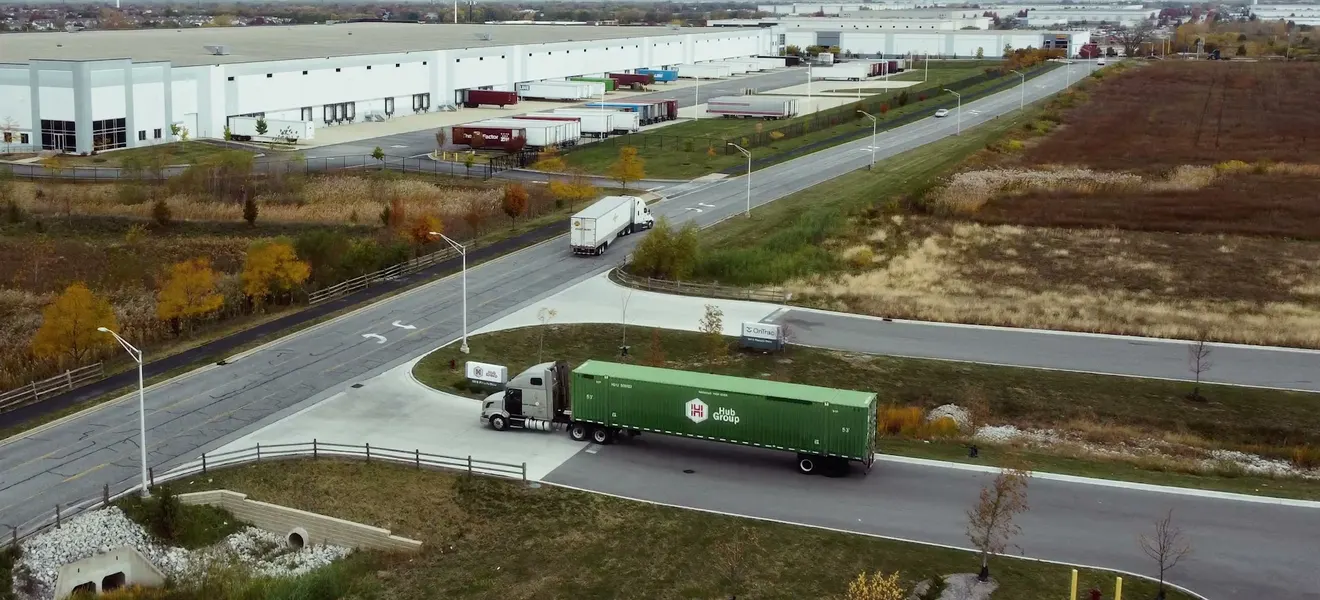
Church & Dwight
$287Ksaved a year
AI agents took over break compliance and coaching at its largest site, with 84% fewer safety events and ROI in under 5 months.
Read the story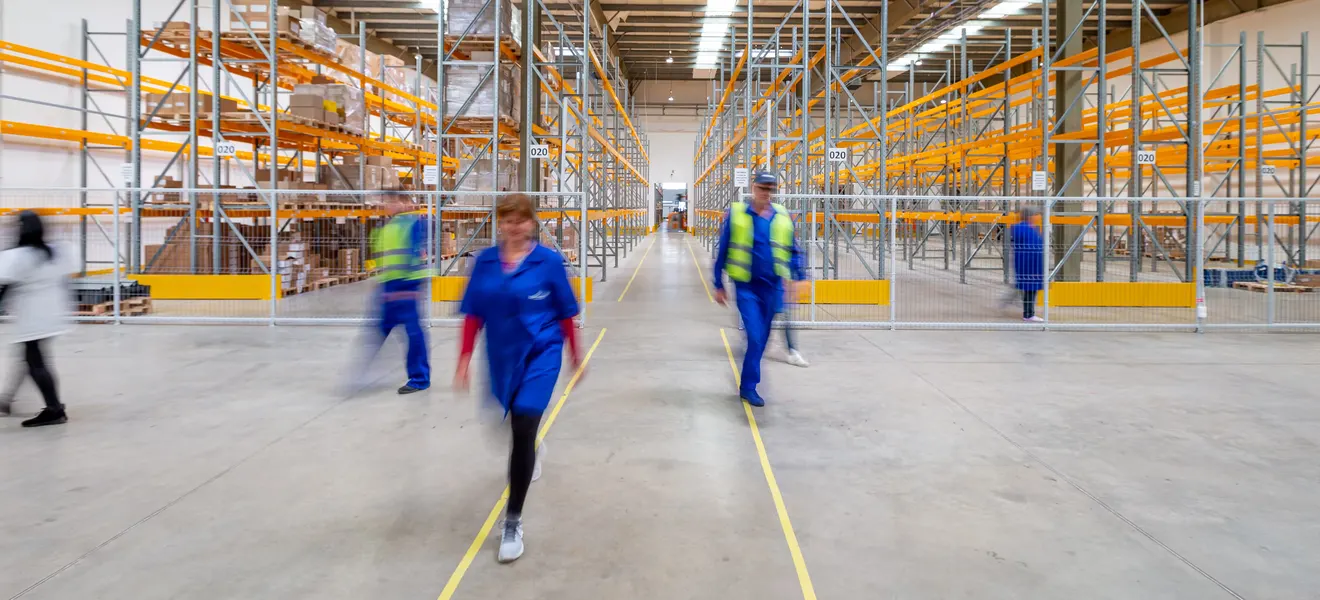
ID Logistics
84%fewer safety incidents
Impacts down 50%+ in three months, phone violations down 99%, and video of every load.
Read the story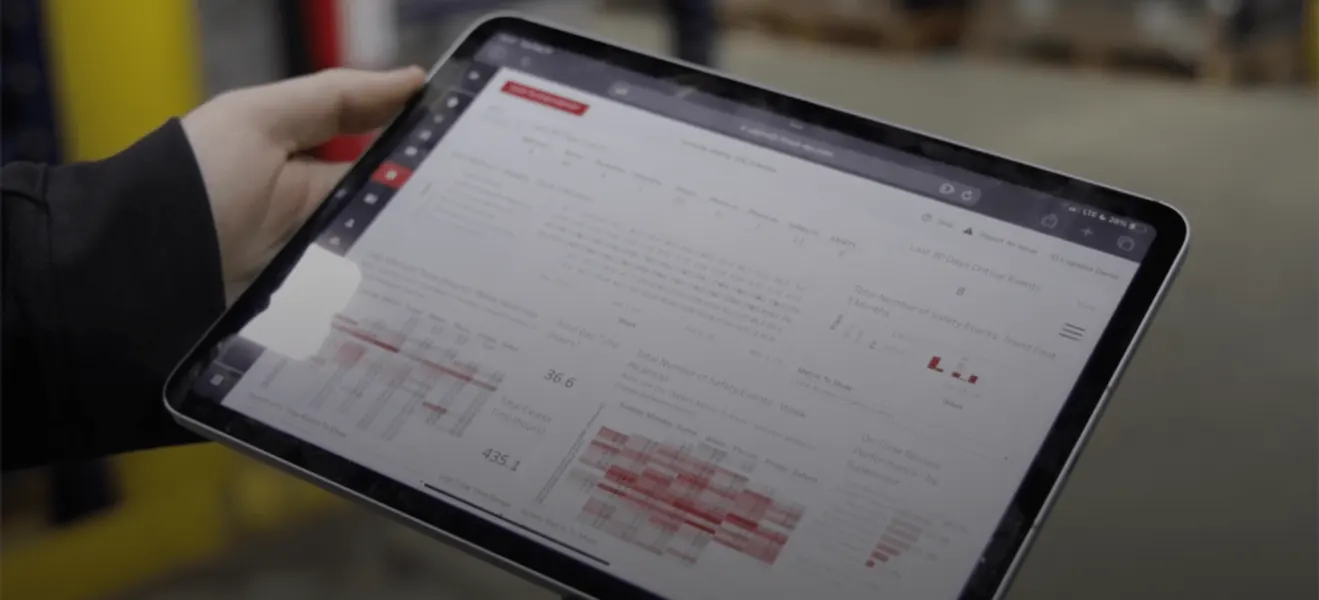
Mars Snacking
$60K+labor cost surfaced
An AiOn agent reviews lost time across a national DC network every week. Cost fell nearly 28% in two months.
Read the story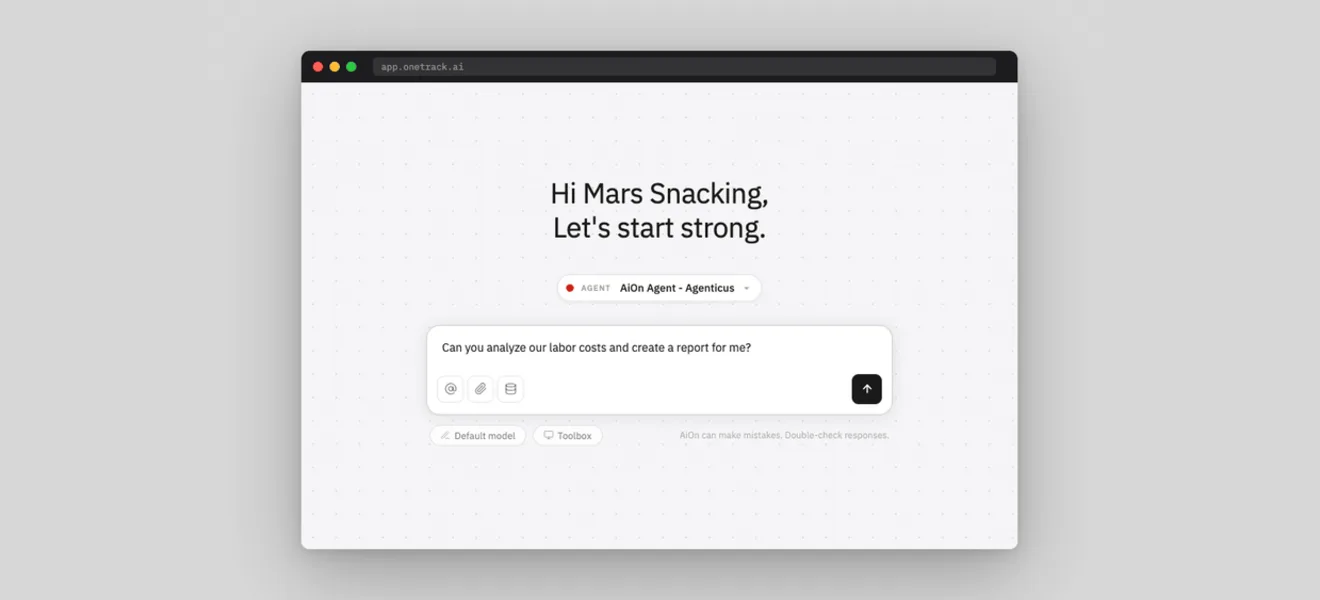
Hain Celestial
80%fewer safety incidents
Weekly safety meetings built on video. Impacts down 70% and phone violations down 92%.
Read the story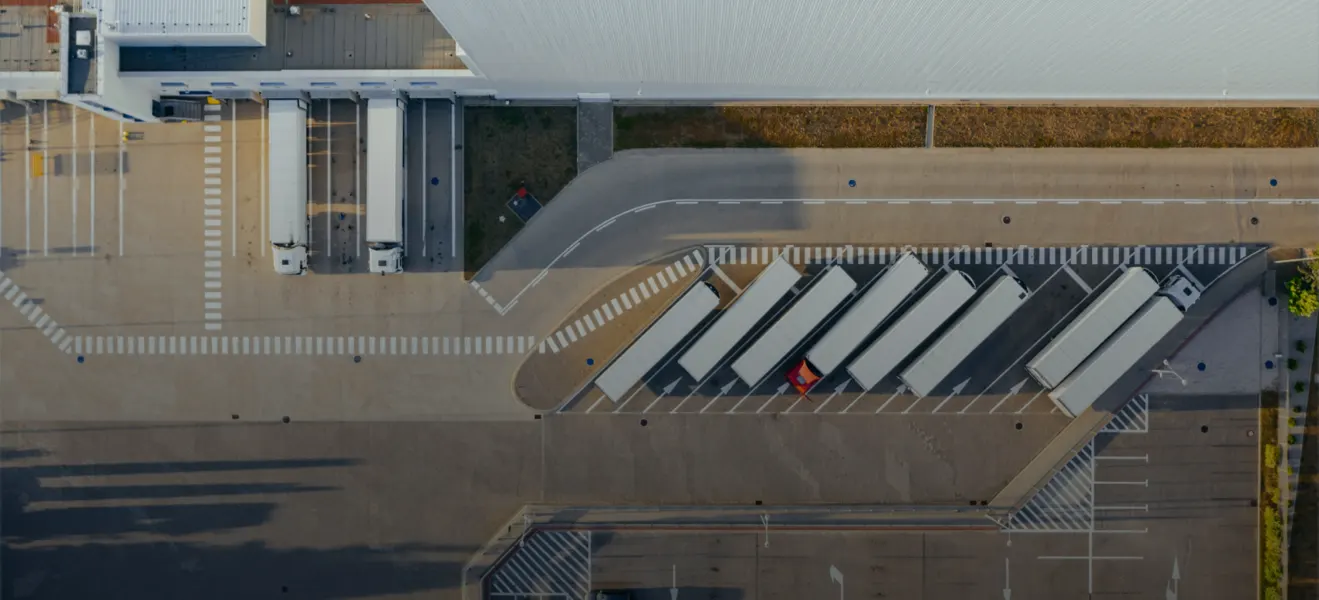
States Logistics
72%fewer safety incidents
Sensors on the whole fleet. Investigations 90% faster and cell phone use down 99%.
Read the story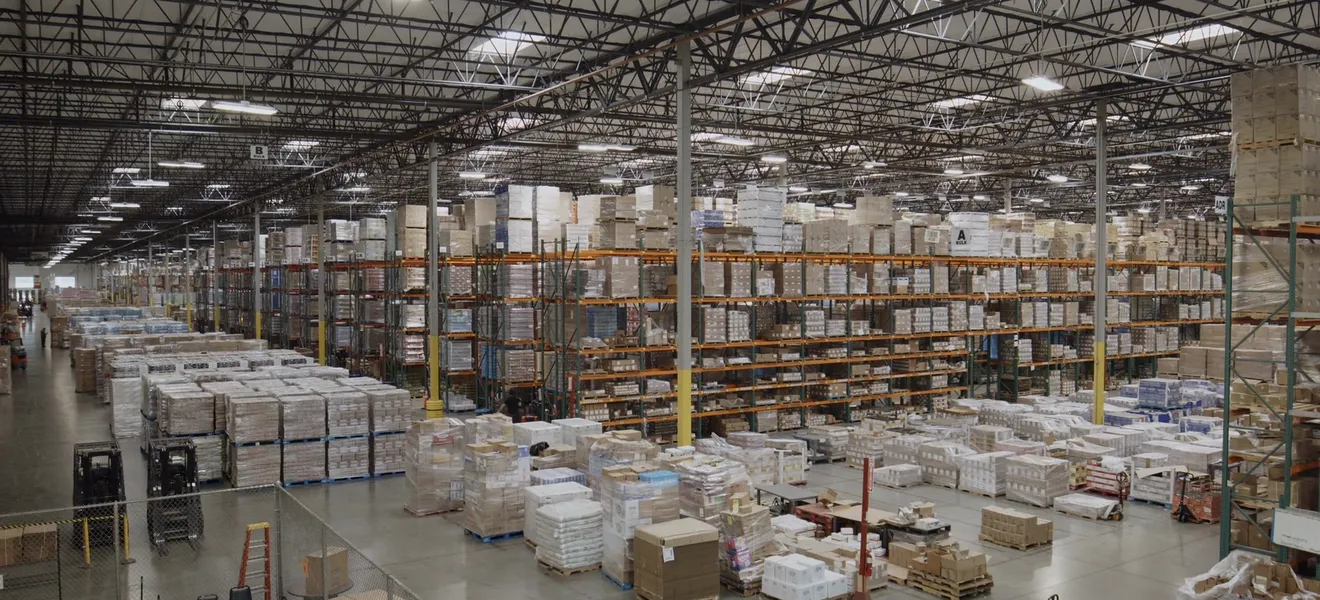
Holman Logistics
360° video alerts and AI trend spotting, so supervisors coach with video proof.
Read the story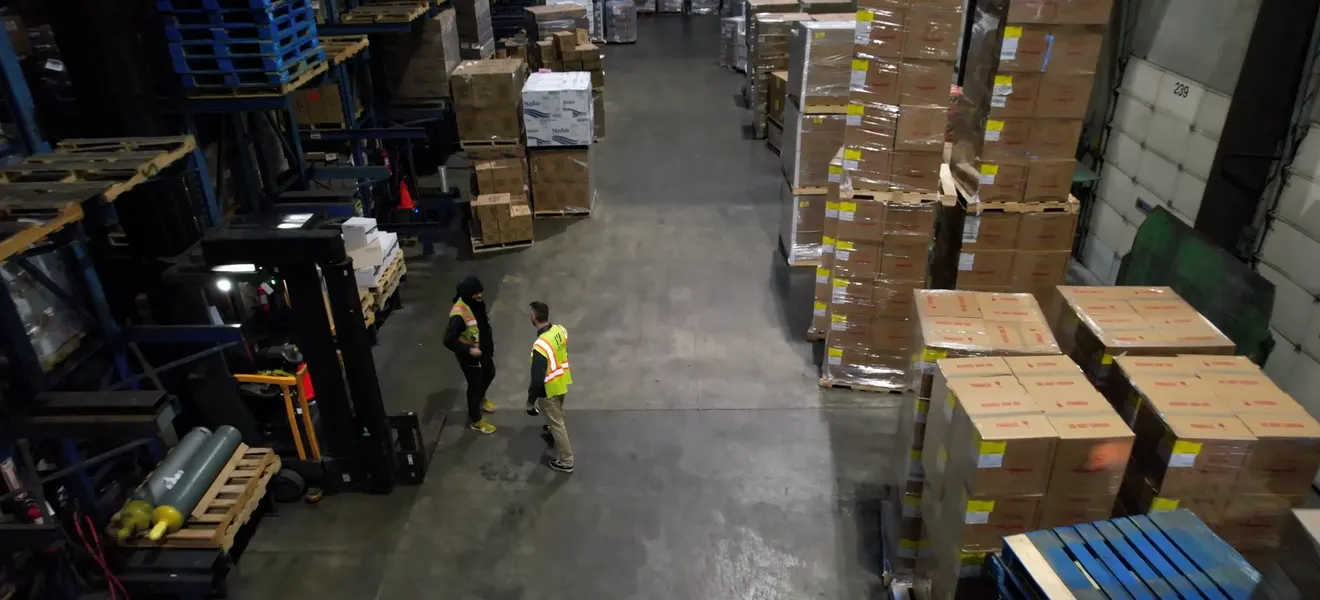
Capacity planning, built with AiOn
From our own operations: a live headcount and crewing planner, built from a few plain-language prompts with no code.
See how it was built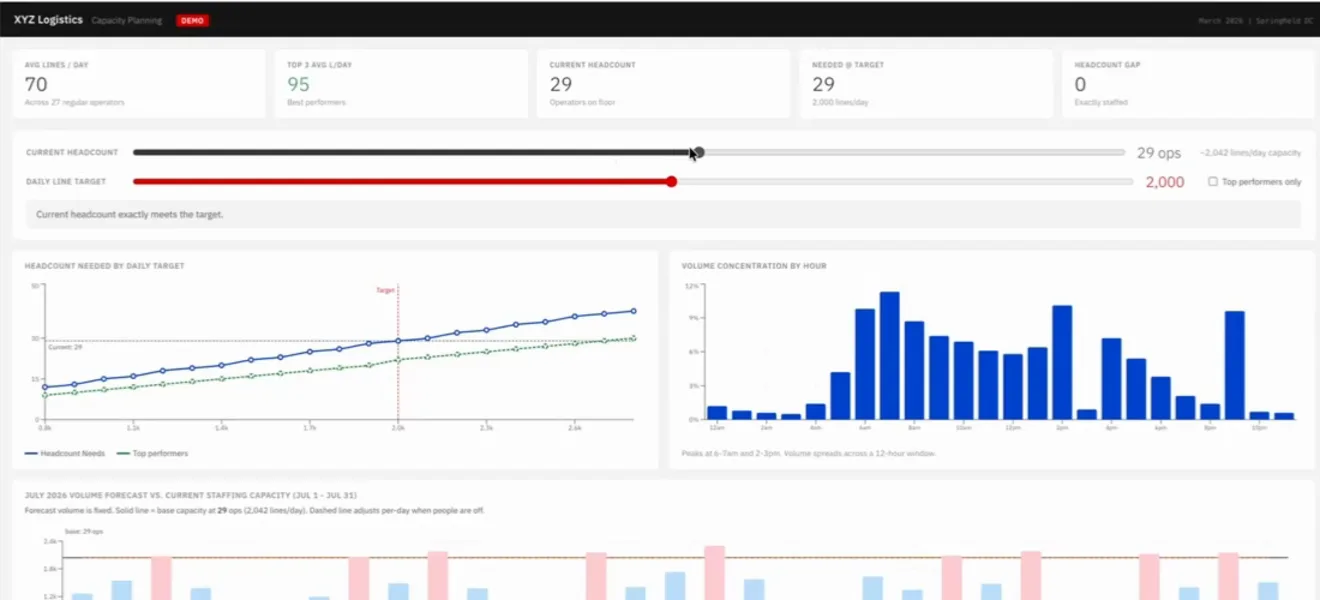
Questions about OneTrack
What problem does OneTrack solve?
Physical operations, warehouses, distribution centers, and factories, run on legacy systems of record like WMS, LMS, YMS, and ERP that rarely talk to each other and capture transactions, not reality. The leaders who run them, EHS and safety directors, plant and site managers, and operations and supply chain executives, are left without a clear, real-time picture of what is actually happening on the floor.
How does OneTrack solve it?
OneTrack is AI built for physical operations. It unifies the data from those systems and adds the ground truth they miss, captured by computer vision sensors that see what actually happens on the floor. On top runs AiOn, our persistent intelligence layer, turning that reality into dashboards, apps, and agents that act.
What problem does AiOn solve?
Operations produce a constant stream of data across sensors and systems, but the people who need answers have no analysts or reporting cycles to keep up. Generic AI does not close the gap: it starts from zero every session and is not built for enterprise data. So the questions that matter, like where overtime is creeping in or which sites are off target, go unanswered or arrive too late.
How does AiOn solve it?
AiOn is OneTrack's persistent intelligence layer, a single agent you talk to in plain language. It retains your role, your goals, and the operations you're responsible for, and moves from question to answer to app to automation: ask a question, get an answer, turn it into an app your team reuses, then hand it to an agent to run on its own. It is persistent (nothing restarts from zero), proactive (surfaces what matters before you ask), and productive (builds the work and acts). It connects across your data sources (WMS and LMS exports, spreadsheets, PDFs, CAD files, images, and more) and is governed and secure: SOC 2 Type II, encrypted, fully audited, and scoped by role.
What results have OneTrack clients seen?
Results vary by operation, but published OneTrack case studies include an 84% reduction in safety incidents at ID Logistics, an 80% reduction at Hain Celestial, a 72% reduction at States Logistics, an 18% increase in units per hour and 45% less gap time across 40+ warehouses at CJ Logistics, and ROI in under five months at Church & Dwight. With AiOn agents, Mars Snacking surfaced more than $60K in hidden labor cost and cut it nearly 28% in the first two months.
Which industries does OneTrack serve?
OneTrack works with consumer packaged goods (CPG) manufacturers and shippers and with third-party logistics (3PL) providers, across warehouse and distribution-center operations in North America.
How is OneTrack different from forklift telematics or CCTV?
Telematics measures impacts but lacks context, and reviewing CCTV takes hours of manual work. OneTrack uses vision AI to understand what actually happened, with video proof, so teams get fewer false alarms, far faster investigations, and coaching based on the leading indicators of safety and productivity issues.
Bring us your hardest problem.
We'll solve it together, on your data.